
Avoid culinary mix-ups! Learn the A2 false friend 'pasta' in Italian (food) vs. Portuguese (glue). Our humorous guide ensures you confidently order noodles, not adhesive.
Mastering 'Pasta': Italian Food vs. Brazilian Glue (A2 False Friends Guide)
Ever found yourself in a foreign country, confidently using a word, only to be met with blank stares or amused laughter? False friends are notorious for these linguistic traps, and 'pasta' is a classic example between Italian and Brazilian Portuguese. What's a delicious dish in Italy can be... well, a sticky situation in Brazil!
At Fluente, we help you speak confidently without embarrassing mix-ups. Let's dive into the fascinating world of 'pasta' and other common A2-level false friends to ensure your conversations are always smooth, never sticky!
Tricky Pairs: 'Pasta' and Other Linguistic Landmines
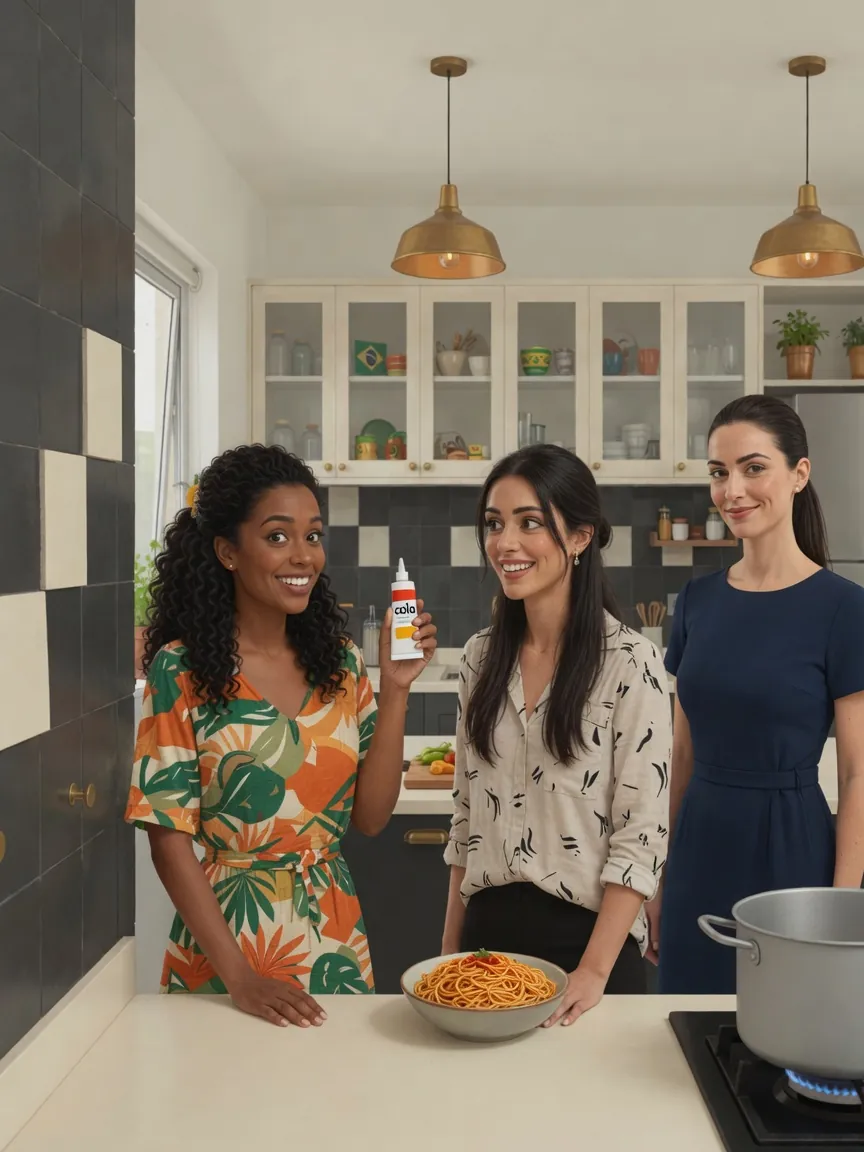
Mastering the false friend 'pasta'! 'Massa' for food, 'cola' for glue. Problem solved!
False friends are words that look or sound similar in two languages but have entirely different meanings. They are a common source of confusion for language learners. Understanding these subtle differences is key to speaking accurately.
Here are some of the most common A2 false friends between Italian and Brazilian Portuguese:
1. Pasta (Italian: Food) vs. Pasta (Brazilian Portuguese: Glue/Paste)
This is the big one! In Italy, pasta is synonymous with noodles, spaghetti, ravioli – the delicious foundation of Italian cuisine. In Brazil, however, pasta refers to a paste or glue, often used for crafts or even for binding documents. Imagine the confusion!
Wrong-use example:
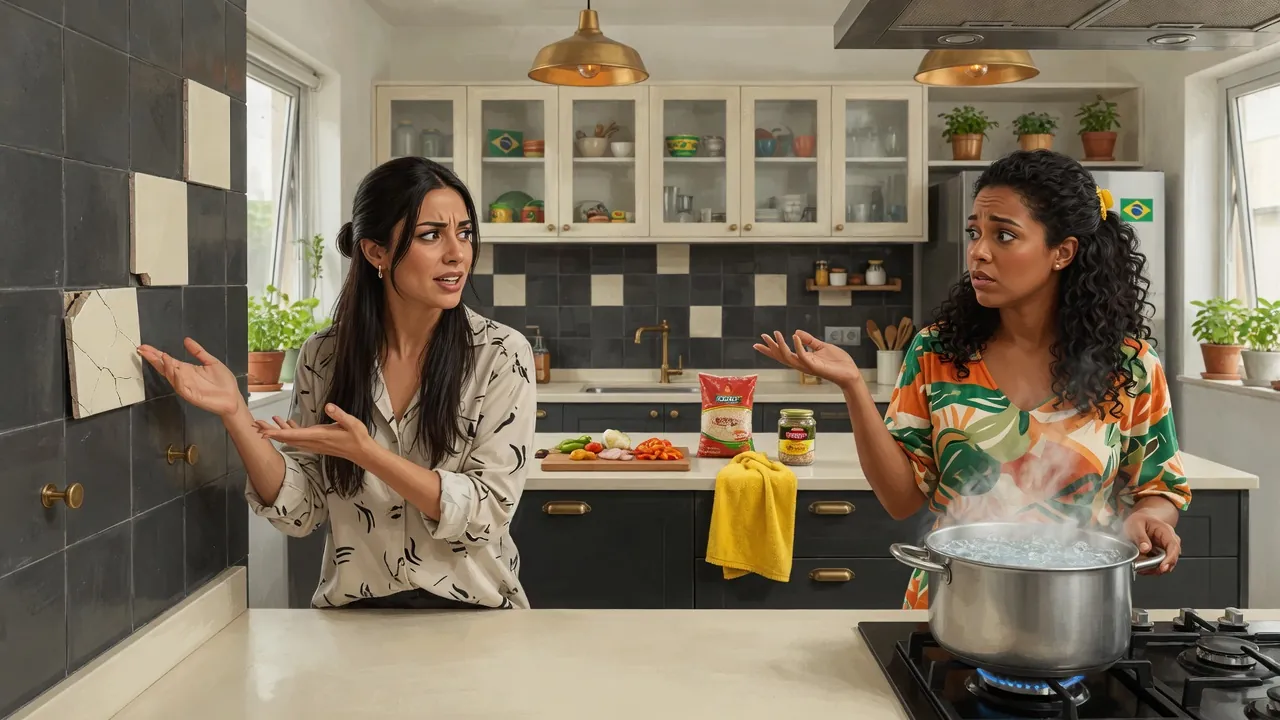
Sofia, an Italian visiting Brazil, is helping her Brazilian friend Ana in the kitchen. She spills some sugar and wants to fix a loose decorative tile on the wall.
Dialogue:
Ana: (Looking at Sofia, who's eyeing a loose tile) Tudo bem, Sofia?Sofia: Sì, sì, tutto bene, Ana! Ma... uhm... questa piastrella è un po' rotta. Serve un po' di pasta per aggiustarla, vero? (She gestures towards the tile, then looks around for a tube of glue.)
Ana: (Confused, gesturing to the stovetop where water is boiling) Pasta? Você quer massa pra comer agora? A gente ainda nem começou a cozinhar o macarrão! (Ana thinks Sofia wants to cook pasta for a meal.)
Sofia: Ma no, Ana! Non voglio mangiare! Voglio la pasta per la piastrella. Quella che si attacca!Ana: (Eyes wide with realization, she laughs) Ahhh, você quer COLA! Não 'pasta'! 'Pasta' pra gente é a massa de comida, ou então pasta de dente, ou uma pasta de arquivos! Pra grudar, a gente usa 'cola'!
The 'Aha!' moment: Ana clarifies that 'pasta' in Portuguese means glue, or something else entirely, not food.
Giulia: (Another Italian friend, walking in) Cosa succede? Siete già a tavola? Ho sentito "pasta"!Sofia: Giulia, aiutami! Ho chiesto "pasta" per la piastrella e Ana pensava volessi mangiare!Giulia: (Smiling knowingly) Ah, i "falsi amici"! In portoghese, "pasta" è la colla o un dossier. Per la nostra pasta, diciamo 'massa' o 'macarrão' qui in Brasile.Ana: Exato! Pra comida é 'massa' ou 'macarrão'. Pra colar, é 'cola'.Sofia: (Sighing with relief and understanding) Capito! Quindi, per il muro, voglio 'cola'. E per il piatto, voglio 'massa'.
2. Cena (Italian: Dinner) vs. Cena (Brazilian Portuguese: Scene)
Another tricky one! In Italian, cena means 'dinner' or 'supper,' the evening meal. In Brazilian Portuguese, cena refers to a 'scene,' like in a play, movie, or even a literal landscape.
Wrong-use example:
An Italian speaker in Brazil might say, "Vamos fazer uma boa cena juntos?" intending to invite someone for a nice dinner, but it would literally mean, "Shall we make a good scene together?" which sounds very odd!
Correct alternatives:
- For 'dinner' in Brazilian Portuguese, use
jantar. - For 'scene' in Italian, use
scena.
Examples:
- Stasera mangiamo la cena presto. (Italian: Tonight we're eating dinner early.)
- A cena do filme foi muito emocionante. (PT-BR: The scene of the movie was very emotional.)
- Vamos preparar um jantar delicioso. (PT-BR: Let's prepare a delicious dinner.)
- Ho visto la scena finale dell'opera. (Italian: I saw the final scene of the opera.)
3. Brutta (Italian: Ugly/Bad) vs. Bruta (Brazilian Portuguese: Raw/Brute)
These words look almost identical, but their meanings diverge significantly. In Italian, brutta (feminine) or brutto (masculine) means 'ugly' or 'bad.' In Brazilian Portuguese, bruta (feminine) or bruto (masculine) generally means 'raw,' 'untamed,' 'brute,' or 'gross weight.'
Wrong-use example:
An Italian learner might say, "Que mulher bruta!" to describe an ugly woman, but in Portuguese, it would sound like, "What a brutish/untamed woman!" – a very different and potentially offensive description.
Correct alternatives:
- For 'ugly' or 'bad' in Brazilian Portuguese, use
feia(feminine) orfeio(masculine),ruim. - For 'raw' or 'brute' in Italian, use
grezza(feminine) orgrezzo(masculine),selvaggia/selvaggio,brutale.
Examples:
- È stata una giornata molto brutta. (Italian: It was a very bad day.)
- Essa madeira está em estado bruto. (PT-BR: This wood is in a raw/untreated state.)
- Ela não é feia, é apenas diferente. (PT-BR: She is not ugly, she is just different.)
- La forza bruta non è sempre la risposta. (Italian: Brute force is not always the answer.)
Master False Friends with Fluente!
False friends are tricky, but they are also a fun way to learn the nuances of a new language. By paying attention to context and knowing the correct alternatives, you can avoid embarrassing blunders and communicate more effectively.
Ready to deepen your understanding and speak like a native? Our Fluente teachers are experts at guiding you through these linguistic challenges. Book a lesson today!
Practice Makes Perfect: Speaking Drill
To solidify your understanding, try this quick speaking drill. Translate the following sentences into the target language (Italian or Brazilian Portuguese) using the correct terms for the false friends we discussed. Say them aloud!
- I love Italian pasta! (IT: pasta / PT-BR: massa)
- I need some glue for this paper. (PT-BR: cola)
- What time is dinner? (IT: cena / PT-BR: jantar)
- The final scene of the movie was beautiful. (IT: scena / PT-BR: cena)
- This is a very bad situation. (IT: brutta / PT-BR: ruim)
- The diamond is still raw. (PT-BR: bruto)
Self-Correction:
- Amo la pasta italiana! / Eu amo massa italiana!
- Preciso de cola para este papel.
- A che ora è la cena? / Que horas é o jantar?
- La scena finale del film era bellissima. / A cena final do filme foi linda.
- È una situazione molto brutta. / É uma situação muito ruim.
- Il diamante è ancora grezzo. / O diamante ainda está bruto.
Continue Learning with Fluente
Don't let false friends discourage you. They are a natural part of the language learning journey. With practice and targeted guidance, you'll soon be navigating them like a pro.
Explore more linguistic insights with our other posts, like understanding the false friend 'Amigo: falsos amigos em português, espanhol e inglês' or tackling common challenges between 'Italiano vs. Espanhol: Falsos Cognatos e Erros Recíprocos Comuns'.
Fluente Teacher provides personalized lessons designed to help you overcome these hurdles and achieve fluency faster. Start speaking more confidently today!